


Photo by Pedro Jose Borges-Nielsen
Communication has been shaping history since … well… forever!
What project gets funded, whose idea gets shared, who gets elected – to give but a few examples – are all decided by:
- who speaks up;
- who does it well;
- who does it again and again and again!
The trouble with this is… if the same people keep speaking up, the same ideas (and systems!) will keep shaping how we live.
Part of the reason I do what I do is to enable more voices to express more ideas – ideas we never even knew existed! 🤩
So that we all have more options to choose from, when we decide how we want to live.
So I absolutely loved talking to the KATLA Nordic community about how we can all speak up more authentically, more easily, and with more impact 🎙️ as part of their Leadership Day on 17 May 2025.
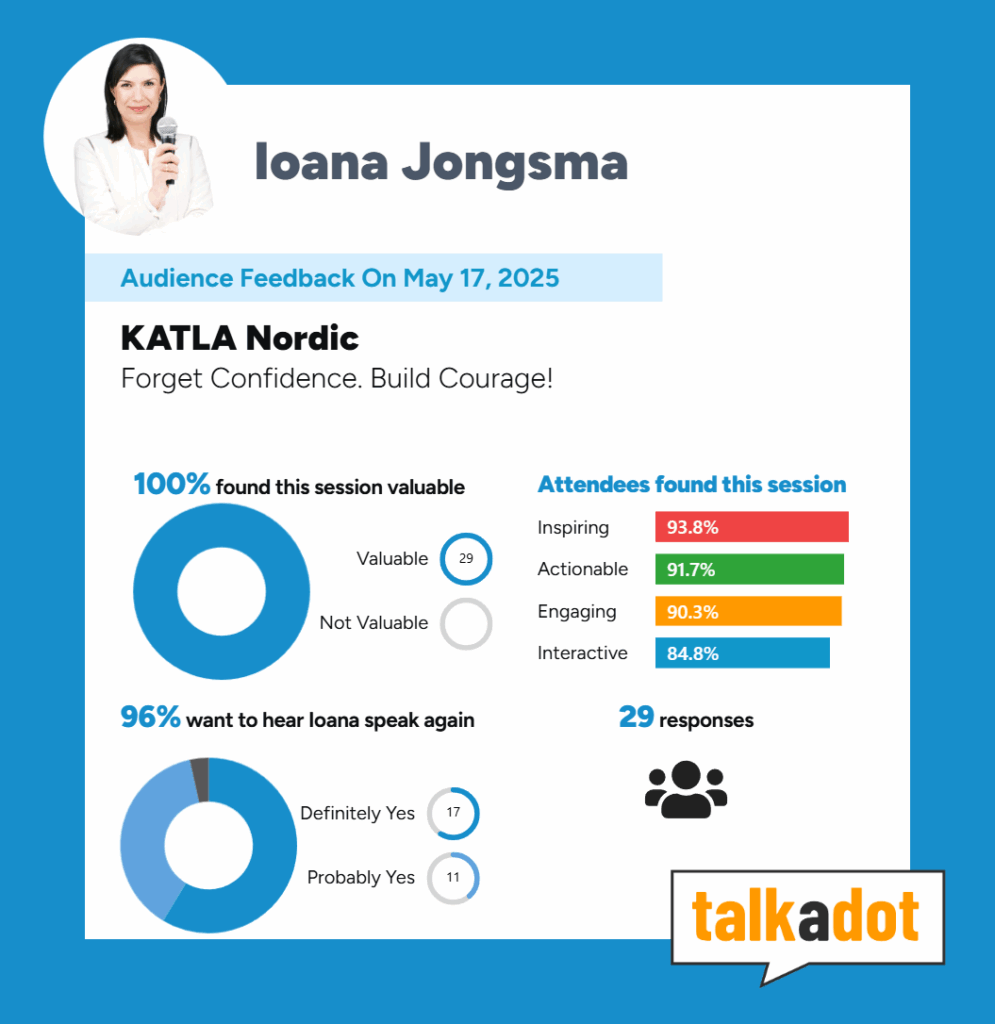
Before I go into how I prepared, here’s the feedback I got at the end of my talk:
How I made this happen
You know those speakers who have a plug-and-play slide deck that they use at all events, for all audiences? Maybe they change an example or two, but essentially, they’re ready to go if they get booked for a talk tomorrow.
Sometimes, I wish I could be like that.
I wish I didn’t have to spend weeks preparing every single talk, workshop, and presentation I give.
But every time I think “Ok, now I’ve got it, I can reuse this” – a new client comes along and I just can’t help but ask them the one question that always gets me into trouble: What’s important for YOU? Because it’s not about what I think is interesting to share. It’s about what they need.
So here’s the process I went through while preparing for this talk:
- I copied out the initial email I got from the event organiser and underlined the key words.
- I brainstormed and jotted down some ideas I thought might be useful, around each key word, without locking myself into any one of them.
- I asked the event organiser for a briefing call to align on which of these would be most useful for their guests.
- During that briefing*, I asked the following questions:
-
- Who are the attendees?
- What’s the reasoning behind the theme? What need does it answer? What does it mean to the community?
- What are some of the current challenges of the KATLA members?
- What should this talk do? Inspire, teach, start conversations, move to action?
- What’s important to you as a steward of the community?
- Will there be other speakers? What will they be talking about?
- How big is the room? What’s the set-up? (round tables, amphitheatre, etc; important to know what type of interaction is possible)
- Where in the line-up would I be placed? (important to know what the energy needs to be)
-
- I went back to my notes and selected only those ideas that overlapped with the answers I got from the briefing call.
- From all the ideas I had left, I asked myself: what’s the one idea that, if adopted, will impact all the other aspects of communication I would like to cover?
- I used that one idea as my one core message and built my talk around it: I wanted to encourage the participants to stop chasing some generic idea of “Executive Presence”, as seen in the media, and instead, to explore what Authentic Leadership looks like when it’s rooted in ourselves.
*A big thumbs up to Hrefna Guðrún Pétursdóttir who was an incredibly supportive event organiser, answered all of my questions in detail and made my entire experience as a speaker a super smooth one!
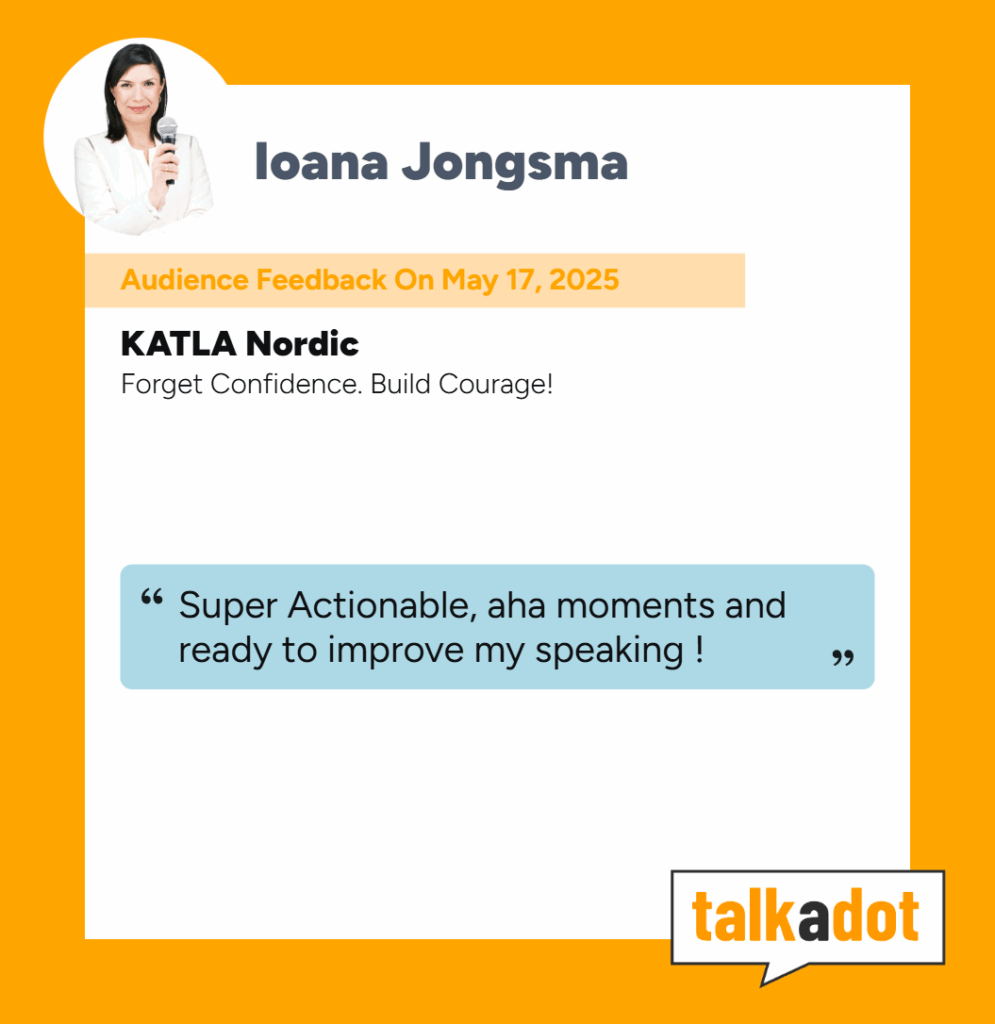
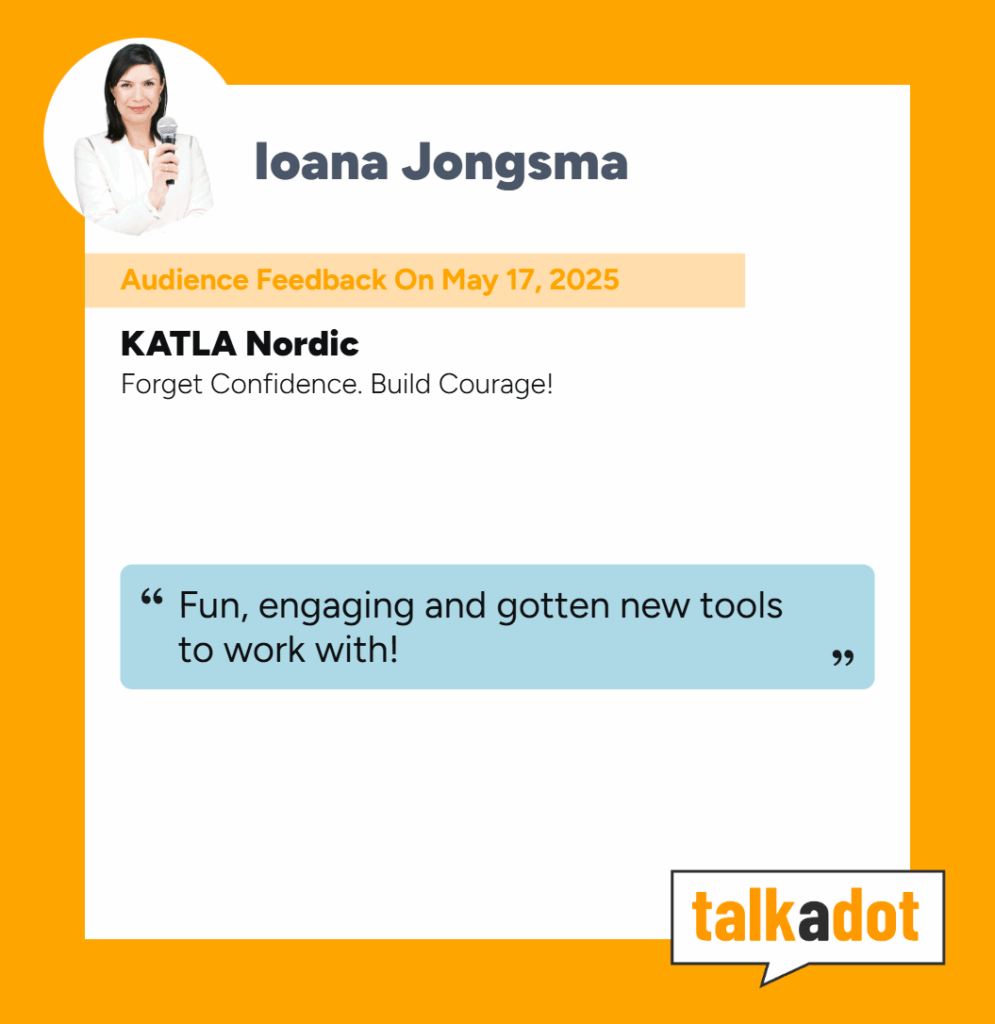
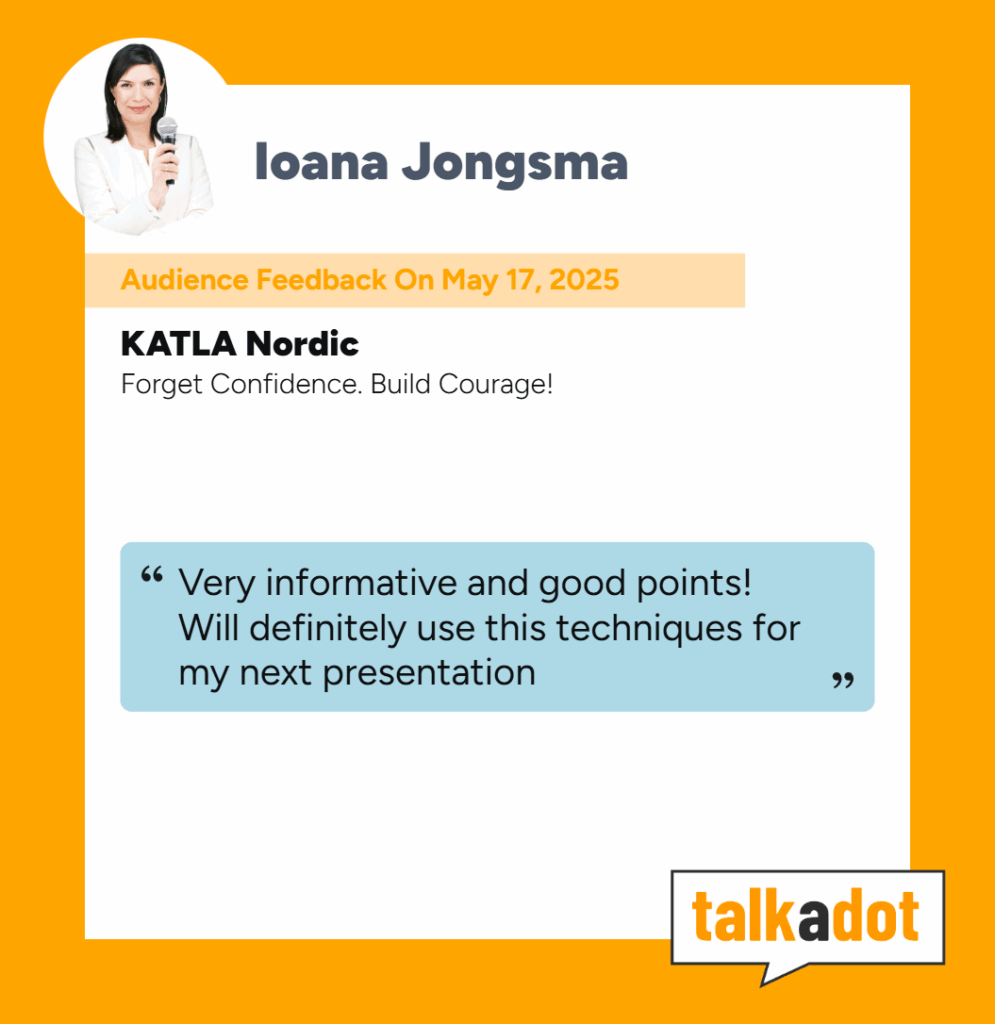
The result:
What you need to learn from this
We all have something we’re excited to share. Something we’ve thought about deeply, maybe even built a career on. So of course we want to talk about that.
But here’s the thing: if it doesn’t land with the audience, it doesn’t matter how brilliant or important it is.
The question isn’t “What do I want to say?”
It’s: “What do they need to hear to move forward?”
That doesn’t mean we abandon our message. It means we connect it to their world, anchoring it in their concerns, their frustrations, their ambitions.
That’s when Communication becomes Leadership.
If you’re someone who gets invited to speak at corporate events, conferences, or for professional associations – feel free to “steal” my playbook! Spice to taste 🙂
If you’re a people leader considering how to upgrade your Presence, either with your team or when leading upwards, the moral of this story is: before going into a meeting knowing what you want to say, pause just for a moment and ask yourself, “I know what I want. But what do my stakeholders need?” And if you want to level up even further, ask them!
Yes, it will sometimes mean you’ve got extra work to do: ideas to rework, data to research, slides to redo, new flows to practice.
But the best communicators aren’t the ones who always have their content ready to go. They’re the ones who create the most connection. And connection doesn’t come from knowing all the answers.
It comes from asking better questions. From listening deeply. From showing your audience that you see them, and that you’ve thought about what it’s like to be them.
If you’re ready to work on your Leadership Presence and speak with confidence in any room…
… let’s connect!
Drop me a line here, here, or here.